 Loam & Leaf
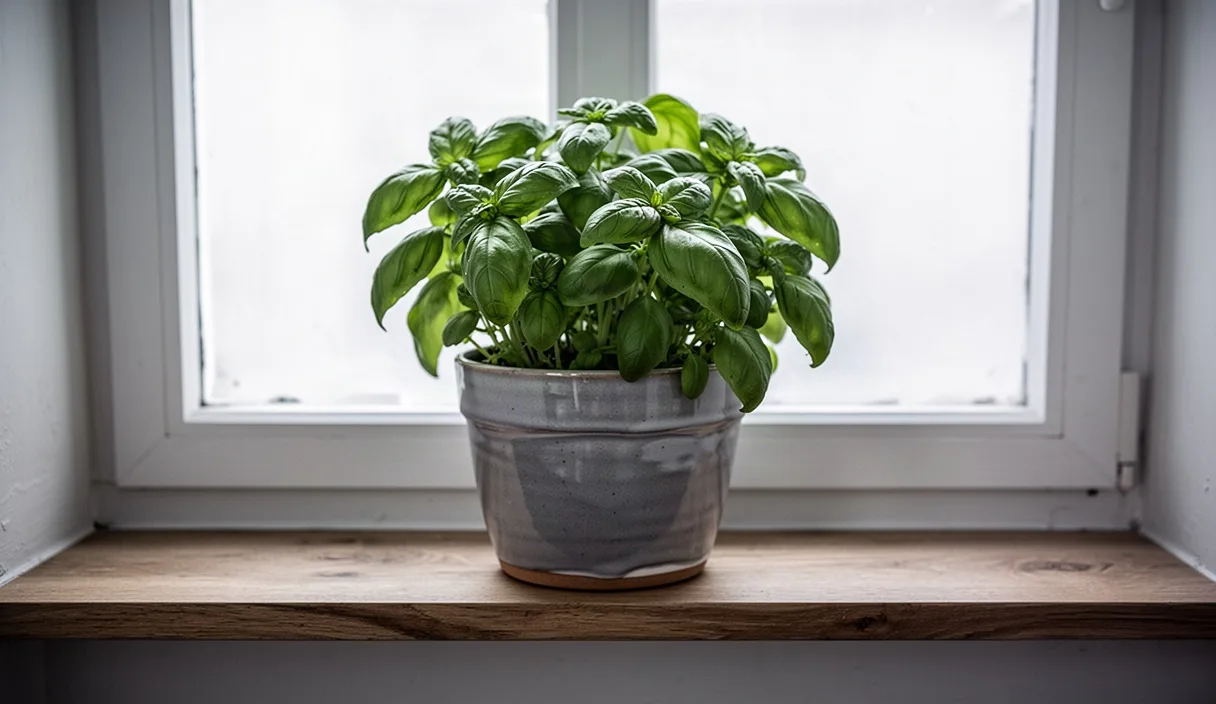
Keep tender sweet basil alive during short cold days. Provide targeted light and warm potting media indoors.

- Basil requires warm ambient root temperatures.
- Supplemental grow lights offset winter darkness.
- Pinching flower buds preserves leaf flavor.
Winter changes the environment inside the home. Sun paths drop lower in the sky. Windowsills lose warmth as cold air gathers along the glass. Basil is native to warm climates in central Africa and Asia. It struggles when days shorten and room temperatures fall.
You can keep sweet basil alive on an indoor sill through the coldest months. The growth remains slower than in summer. The stems produce fewer leaves, yet the oils stay fragrant. Success depends on small, daily balances of temperature, root hydration, and artificial daylight.
Checking window light exposure
Natural light drops significantly between October and February. Basil demands at least six hours of direct sun each day. Eight hours produces stronger stems and tighter leaf spacing. In winter, standard window glass filters out a portion of solar radiation. Dirty exterior glass or window screens reduce that light even further.
South-facing windows offer the longest exposure during winter in the northern hemisphere. The sun sits low, so light penetrates deep into the room. East-facing windows provide clean morning light without high heat, but the duration is rarely sufficient alone. West-facing windows bring warm afternoon light, though late winter afternoons can chill down quickly once the sun sets. North-facing windows do not receive direct sunlight and cannot sustain basil without assistance.
| Window Orientation | Average Winter Direct Sun | Suitability for Basil | Intervention Required |
|---|---|---|---|
| South | 5 to 7 hours | Moderate to High | Rotate pot twice weekly |
| East | 2 to 4 hours | Low | Add supplemental light |
| West | 3 to 5 hours | Moderate | Add supplemental light |
| North | Zero hours | Unsuitable alone | Full artificial light required |
Observe the shadows cast on your windowsill at midday. A sharp, distinct shadow indicates light strong enough for basil metabolism. A soft, blurred shadow means the plant will stretch toward the glass. Stretching causes weak, spindly stems with pale leaves. Move the pot to the clearest southern pane available.
Maintaining pot root temperature
Basil foliage can tolerate indoor air at 68 degrees Fahrenheit. Roots in pots react differently. Window ledges of stone, slate, or tile hold cold temperatures from the outdoors. The cold moves directly through the base of the container into the potting mix.
Root uptake slows when soil temperatures drop below 58 degrees Fahrenheit. Water remains in the mix because the roots cannot absorb it. Pathogens thrive in this damp, cold medium. Keep the root ball between 65 and 72 degrees Fahrenheit for steady winter health.
Raise the pot off the bare ledge using an insulative barrier. Cork discs, wooden blocks, and thick felt pads work well. A slice of natural cork measuring 1/2 inch thick prevents thermal bridging from cold sill surfaces. This simple barrier keeps root zone temperatures aligned with indoor room air.
Container choice affects heat retention:
- Glazed ceramic: Holds soil moisture and prevents rapid evaporative cooling through container walls.
- Unglazed terracotta: Allows water to evaporate through porous clay, which chills the root ball in winter drafts.
- Thick nursery plastic: Lightweight, non-porous, and insulates roots better than thin decorative metal pots.
Setting up supplemental spectrum lighting
Natural sill light in winter rarely supplies enough energy on its own. Overcast winter skies provide low foot-candle readings. Basil requires supplemental illumination to prevent stem elongation and leaf drop. A simple full-spectrum LED light supports winter photosynthesis.
Select an LED fixture balanced between 4000K and 6500K color temperature. This range mimics bright, balanced daylight. Red wavelengths encourage leaf expansion. Blue wavelengths prevent the plant from growing tall and weak. Specialized grow bulbs fit into standard adjustable desk lamps positioned right above the sill.
- Clamp or position the light fixture directly above the basil pot.
- Set the bulb distance between 4 and 8 inches above the highest leaves.
- Plug the light fixture into a mechanical or digital outlet timer.
- Set the timer to run for 12 to 14 hours each day.
- Adjust the lamp height as the plant slowly adds new vertical growth.
Keep the light consistent. Turn the fixture on at the same time each morning. Plants regulate internal rhythms based on light signals. Inconsistent light cycles stress the basil and cause premature flowering. Basil leaves lose their sweet flavor once flower buds appear.
Watering when topsoil dries out
Winter water management requires restraint. Plants drink far less water in short days than in summer heat. Potting mix stays damp longer because indoor evaporation rates drop. Overwatering is the most frequent cause of winter plant failure.
Check the soil using your index finger. Push your finger into the soil to a depth of 1 inch. If the mix feels cool and damp, leave it alone. Water only when the top inch feels dusty, dry, and loose. The lower half of the pot will still contain trace moisture for root hairs.
Apply water until liquid trickles from the bottom drainage holes. Always use containers with unobstructed drainage. Discard any water that collects in the saucer within 15 minutes of watering. Letting a pot sit in water suffocates fine root hairs and initiates root rot.
Water temperature matters during cold seasons. Cold water drawn straight from the municipal tap shocks root tissues. Use water that has rested inside at room temperature for several hours. Room-temperature water around 68 degrees Fahrenheit protects root cell walls from thermal stress.
Harvesting top leaf nodes
Harvesting winter basil is an act of plant shaping. You do not cut entire stems down to the soil line. Instead, you guide the plant to grow bushy rather than tall. Winter pruning balances foliage mass with lower light levels.
Locate the growing tip on an active stem. Trace the stem down past the first set of small leaves to the next node. A node is the point on the stem where two leaves branch out in opposite directions. In the corner where each leaf meets the main stem, two tiny leaflets sit ready to grow.
Use clean, sharp shears or snips. Cut the main stem roughly 1/4 inch above the leaf node. Do not tear or pull the stem with your fingers. Tearing crushes the vascular tissue and invites gray mold. Once cut, the plant releases hormones to the two tiny side buds. These buds slowly develop into two new branch stems.
Never remove more than a third of the plant foliage during one harvest session. Winter regeneration takes time. Leave the large lower leaves intact. These older leaves act as solar panels that feed the root system through dim winter weeks.
Preventing root chill near glass panes
Window glass transfers outdoor cold into the immediate room space. On a night when outdoor temperatures drop below freezing, the air within two inches of a glass pane falls rapidly. This creates a microclimate of cold air that sinks downward directly onto the windowsill.
Leaves that press against the glass pane will suffer frost damage. The cell walls freeze, turn black, and collapse within hours. Pull the container away from the glass. A clearance of 3 to 4 inches protects foliage from direct contact with freezing panes.
Drafty window frames cause additional problems. Air leaks pull moisture from leaves and dry out topsoil unevenly. Inspect the window sash for moving air using a lit candle or stick of incense. Seal air gaps with temporary weatherstripping, removable rope caulk, or clear window insulation film.
Pay attention to window drapery and blinds at night. When you close curtains between the room and the plant, you isolate the pot in the cold gap. The plant sits trapped against the freezing glass. Keep the pot inside the heated room envelope, or open curtains slightly so ambient home heat reaches the windowsill.
Common mistakes
- Placing pots directly on stone surfaces: Uninsulated sills draw warmth from potting soil and cause root dieback.
- Following a rigid calendar watering schedule: Pouring water on fixed days regardless of soil dryness drowns root systems.
- Allowing foliage to touch cold glass: Direct contact freezes leaf margins and invites fungal rot.
- Feeding synthetic fertilizers: Heavy nitrogen feeding forces weak vegetative growth that the winter sun cannot sustain.
- Closing curtains behind the basil: Trapping the container on the cold window side drops the temperature below safe limits.
- Harvesting lower leaves first: Stripping the base leaves deprives the plant of its primary energy engines.
Next steps for the season
Examine your chosen window space today. Clean the interior and exterior pane thoroughly with warm water and vinegar. Dust and mineral film on glass cut winter light significantly. Wipe down the ledge and place an insulative cork coaster where the pot will sit.
Check the container drainage. If your plant lives in a pot without bottom holes, repot it into a well-draining plastic or glazed vessel. Use a loose, peat- or coir-based potting mix amended with coarse perlite. Perlite creates air pockets that prevent winter compaction.
Set up an artificial light fixture early. Do not wait for stems to stretch and lean before adding supplemental illumination. Run the light through the short days of December and January. Reduce artificial hours gradually in March as natural daylight lengthens and sun angles climb.
This journal provides educational content only; consult your regional agricultural extension office for local planting dates and soil pathology. Disclaimer