 Loam & Leaf
Identify fruiting wood before you cut cane berries this autumn. Match your pruning cuts to summer-bearing or autumn-bearing varieties.

- Primocanes fruit on first-year green stems.
- Floricanes fruit on second-year woody bark.
- Cutting old spent canes prevents fungal disease.
Raspberries grow from perennial root systems. The canes live for two years. A plant produces green stems in the first season. These same stems turn woody and yield fruit before dying in the second season.
Pruning manages this two-year cycle. It directs water and stored starch to productive wood. It keeps air moving through the canopy. Regular cuts prevent fungal infections and maintain berry size.
Distinguishing primocane from floricane stems
Every raspberry stem fits into one of two age categories. Primocanes are first-year canes. Floricanes are second-year canes. Understanding the difference ensures you keep the productive wood.
Primocanes emerge from the soil in spring. They are bright green, succulent, and pliable. The bark is smooth and soft. Spines on these stems are green or pale red and flexible. Primocanes grow upward through early summer. They produce leaves and store energy in the root crown.
Floricanes are the stems that survived the previous winter. Their bark is brown, stiff, and fibrous. The outer surface often peels or cracks in late spring. Spines on floricanes are rigid, sharp, and brown. These canes carry short lateral shoots that flower and bear fruit.
| Feature | Primocane (First Year) | Floricane (Second Year) |
|---|---|---|
| Bark Color | Green to pale yellow-green | Brown, grey, or dark purple-brown |
| Wood Texture | Soft, tender, and flexible | Hard, stiff, and brittle |
| Outer Skin | Smooth and continuous | Peeling, cracked, or papery |
| Spine Rigidity | Supple and bending to touch | Rigid, hardened, and sharp |
| Foliage Position | Leaves grow from the main stem | Leaves grow from lateral fruit spurs |
Autumn-fruiting varieties, such as 'Autumn Bliss' and 'Polka', produce fruit on the tips of primocanes in late summer. Summer-fruiting varieties, such as 'Glen Ample' and 'Tulameen', produce fruit only on the side branches of floricanes in June and July. You can verify the age of a cane by bending it gently. A primocane bends without snapping. A floricane resists pressure and snaps if forced.
Pruning autumn-fruiting varieties to ground level
Autumn-fruiting raspberries bear their crop on first-year wood. The fruiting begins at the cane tip in August. The crop moves downward through October. Once frost kills the upper foliage, the cane has completed its main task.
Prune these varieties during winter dormancy. The ideal window falls between January and late February. The sap stays inside the root crown during this period. Cutting dormant wood causes no fluid loss.
Use clean, sharp bypass pruners. Cut every single cane flush with the ground. Leave stubs no taller than 3 centimeters above the soil line. High stubs invite botrytis and fungal rot into the crown. High stubs also produce weak, twiggy lateral growth instead of strong new canes.
- Inspect the row for weak, dead, or diseased canes before cutting.
- Place the flat cutting blade of the pruner close to the soil surface.
- Make a single horizontal cut across the base of each cane.
- Gather the severed canes into bundles for disposal away from the bed.
Some growers practice double-cropping on autumn varieties. This method produces an early summer crop and an autumn crop on the same plant. To double-crop, leave the strongest canes standing in winter. Cut away only the top section that bore fruit in the autumn. The lower buds on those canes will produce fruit in July. The base will send up new primocanes for autumn fruit. This practice splits the energy of the plant and often reduces individual berry weight.
Thinning summer-fruiting spent canes
Summer-fruiting raspberries fruit exclusively on floricanes. These canes die naturally once the July harvest finishes. Their leaves yellow, their bark turns pale, and the wood dries out. Leaving dead floricanes in the row wastes canopy space and blocks sunlight.
Begin pruning immediately after the final summer picking. Late July to mid-August is the standard window. Cut every cane that carried fruit this season right at ground level. These canes are easy to spot because they retain dried flower stems and empty berry receptacles.
Do not cut the green primocanes that emerged this spring. These green canes will form next summer's fruiting wood. Protect them from damage while you remove the old brown wood. Take your time when extracting the cut canes from the trellis. Pull them downward and outward to avoid snapping the tops of the young primocanes.
Thin the remaining green primocanes after removing the dead wood. A healthy raspberry stool cannot support unlimited stems. Count the canes per meter of row. Retain between 6 and 8 of the thickest, straightest primocanes per linear meter. Space them evenly along your support wire. Cut the thin, weak, or crooked stems down to soil level. Aim for pencil-thick canes with tight internode spacing.
Tying remaining canes to support wires
Raspberry canes lack tendrils and cannot climb on their own. Unbound canes bend under wind load and fruit weight. Heavy canes touch the ground, which leads to fruit rot and pest exposure.
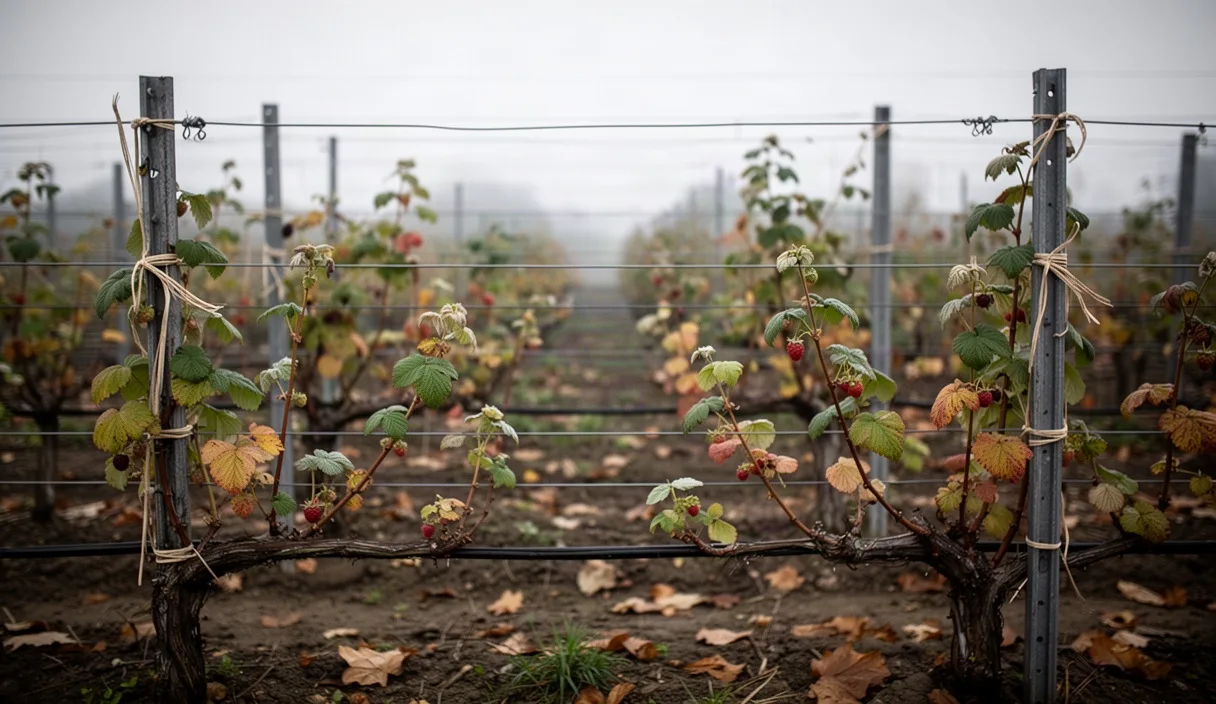
Install a post-and-wire trellis along the row. Set strong timber end posts 60 centimeters deep into the soil. Run galvanized steel wire between the posts at heights of 75 centimeters, 120 centimeters, and 160 centimeters. The highest wire supports the top of the canopy during heavy wind.
Fasten the selected summer-fruiting primocanes to the wires in late autumn. Space each cane 10 to 12 centimeters apart along the wires. Use soft jute twine, cotton string, or flexible rubber ties. Avoid thin wire or plastic twist-ties, which bite into the cane bark as stems swell in spring.
- Bring the cane upright against the wire.
- Loop the twine around the wire first.
- Cross the twine between the wire and the cane to create a buffer.
- Tie the twine around the cane in a firm figure-eight knot.
- Leave enough slack within the knot for the stem to expand in diameter.
Trimming the top tips happens in late winter. Stems that grow taller than the top wire catch the wind and break. Wait until February to trim the excess height. Cut the tips 15 centimeters above the top wire. This cut stimulates the development of productive fruit spurs lower on the stem where picking is easy.
Applying compost mulch over root zones
Raspberries develop shallow, fibrous root networks. The vast majority of active roots stay in the top 20 centimeters of topsoil. This shallow habit makes the plants vulnerable to drought stress and temperature swings. Mulch protects this vulnerable zone.
Apply compost after pruning and winter cleanup. Late winter or early spring works best, right before the soil warms and new primocanes push through the surface. Use well-rotted garden compost, leaf mould, or seasoned manure. The compost must be free of weed seeds and chemical residues.
Spread a layer between 5 and 7 centimeters deep across the planting strip. Extend the mulch band 40 centimeters out on both sides of the cane row. This width covers the full lateral spread of the raspberry root system.
Keep the mulch pulled back 5 centimeters from the actual bases of the canes. Direct contact between damp organic matter and cane bark creates an entry point for fungal spores. A clear collar around each cane allows air to circulate right at the soil interface. The compost slowly releases nitrogen, potassium, and trace minerals throughout the spring rains.
Clearing fallen foliage beneath canes
Dead leaves on the orchard floor harbour diseases through the winter. Spores of spur blight (Didymella applanata), cane blight (Paraconiothyrium fuckelii), and raspberry rust (Phragmidium violaceum) survive on fallen plant debris. Leaving old leaves under the canes guarantees reinfection when spring rain splashes spores onto new primocanes.
Rake the soil clean after the annual leaf drop. Use a narrow spring-tine rake to work between the canes without scraping the bark. Gather all dead leaves, mummified berries, and pruning offcuts. Do not let leaf piles sit at the ends of the rows.
Remove the collected waste from the fruit area completely. If your home compost pile reaches sustained temperatures above 55 degrees Celsius, the fungi die. If your compost pile stays cool, bag the raspberry waste and discard it with municipal green waste. Do not leave it anywhere near the orchard.
Scrape away any thick patches of moss or liverwort that settled over the crowns during autumn. Clean, bare soil allows winter frost to penetrate the surface. Frost discourages overwintering raspberry beetles (Byturus tomentosus) and clears the ground for the application of fresh mulch.
Common mistakes
Pruning at the wrong time of year causes unnecessary stress. Cutting autumn raspberries in early autumn removes leaves that are still feeding the root system. Wait until frost turns the foliage brown before making cuts.
Mowing down summer-fruiting varieties ruins next year's crop. Summer raspberries require two years to complete their cycle. If you cut summer-fruiting plants to the ground in winter, you cut away the canes that would have flowered in June. You will harvest no fruit that season.
Leaving the row too dense reduces air movement. Dense canopies trap moisture, which encourages grey mould (Botrytis cinerea) on the ripening berries. Never leave more than 8 canes per linear meter on a summer-fruiting trellis.
Using dull bypass pruners crushes the cane base. Crushed wood splits, dries out, and welcomes disease. Sharpen your pruner blades with a whetstone before starting the job. Wipe the blades with isopropyl alcohol between rows to prevent transmitting cane viruses.
Practical next steps in the berry patch
Walk your raspberry rows this week to identify the variety types in your garden. Check plant tags or review past harvest dates. Mark summer-fruiting rows with durable garden stakes to avoid confusing them with autumn-fruiting rows.
Inspect your trellis hardware before winter storms arrive. Tighten loose wires using inline wire strainers. Replace rotted wooden support posts with treated timber or metal T-posts.
Sharpen your pruners and check your garden supplies. Ensure you have enough jute twine and well-rotted compost on hand for late winter tasks. If you suspect your canes carry severe systemic viruses like raspberry bushy dwarf virus, consult a local agricultural extension agent before pruning and propagating.
This journal provides educational content only; consult your regional agricultural extension office for local planting dates and soil pathology. Disclaimer