 Loam & Leaf
Keep bed soil covered during autumn rains and winter frost. Grow crimson clover and winter rye to hold soil nutrients.
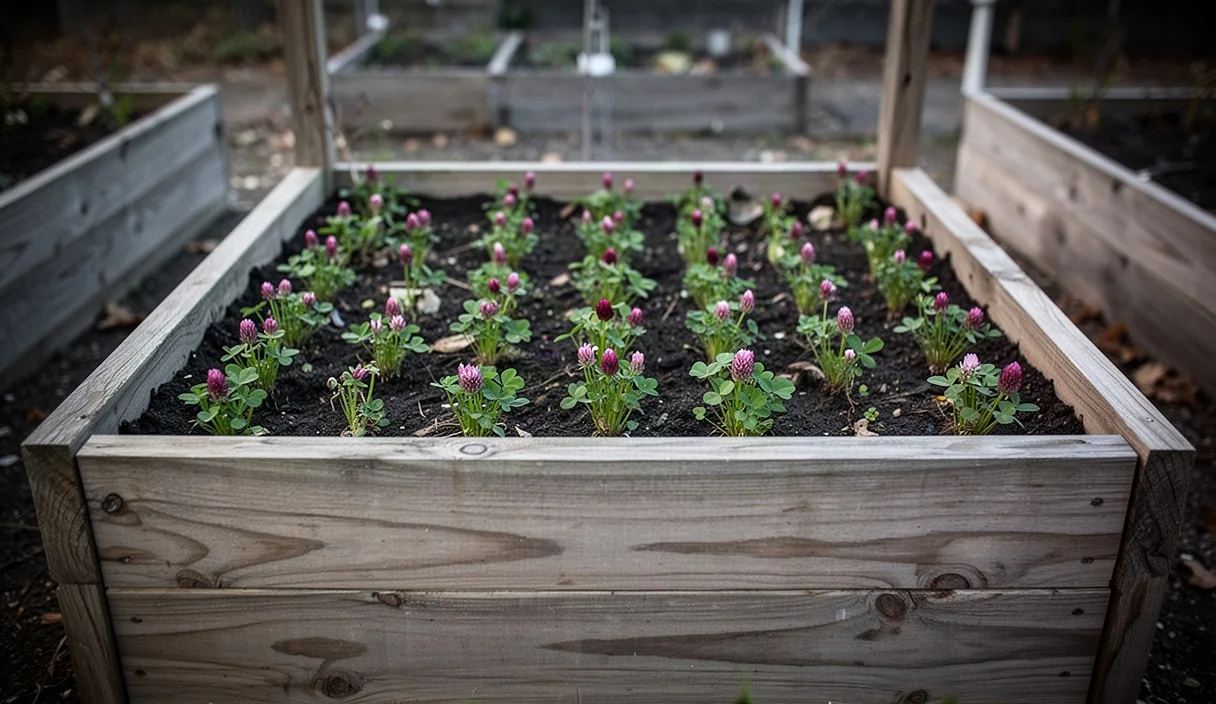

- Cover crops prevent soil erosion and nutrient leaching.
- Legume roots fix nitrogen into the root zone.
- Crimson clover terminates easily before spring planting.
Raised beds lose nutrients quickly over winter. Rain leaches soluble nitrogen through the bottom of the box. Wind blows exposed compost away. The soil shrinks, compacts, and cools faster than native ground.
A cover crop holds the soil in place. Living roots feed fungi and bacteria until frost arrives. The green canopy shelters the surface from heavy rain. In spring, the foliage rots down to feed the next vegetable crop.
Choosing winter cover seed varieties
Raised beds need cover crops that remain manageable. Vigorous agricultural covers can overwhelm a small wooden frame. Deep taproots can also be difficult to dig out by hand in spring.
Cereal rye produces dense biomass and tolerates cold down to minus twenty degrees. Crimson clover fixes atmospheric nitrogen through symbiotic root bacteria. Hairy vetch survives hard freezes but grows long, tangled vines. Daikon radish drills taproots through compacted soil layers, then dies in the first hard freeze.
| Cover Crop | Seeding Rate per 32 Sq Ft | Winter Hardiness | Primary Function |
|---|---|---|---|
| Crimson Clover | 28 grams | Survives to 10 degrees | Nitrogen fixation |
| Winter Rye | 55 grams | Survives to -20 degrees | Biomass and weed suppression |
| Field Peas | 85 grams | Killed at 15 degrees | Nitrogen and tender residue |
| Tillage Radish | 15 grams | Killed at 20 degrees | Breaking subsoil compaction |
| Hairy Vetch | 30 grams | Survives to -15 degrees | High nitrogen accumulation |
Mixes work well in four-by-eight-foot beds. Combine a grass with a legume. The grass provides carbon and physical shelter. The legume gathers nitrogen for the spring brassicas and nightshades.
A mix of winter rye and crimson clover performs reliably in most temperate regions. Sow this mix four weeks before your first expected autumn frost. The clover stays low to the ground. The rye stays upright and shelters the clover leaves.
Clearing spent summer vegetable roots
Preparation begins in late summer. Remove tomato, pepper, and squash vines when production stops. Leave as much native bed soil behind as possible.
Cut large stems off at soil level with hand pruners. Do not yank the entire root ball out of the bed. Pulling heavy root systems brings lower soil layers to the surface. It breaks the existing network of beneficial mycorrhizal hyphae.
The severed roots decay beneath the surface over autumn. They open microscopic channels for air and winter moisture. The new cover crop roots follow these established paths into the subsoil.
Remove diseased foliage from the garden area entirely. Tomato leaves with early blight belong in the municipal yard waste bin. Powdery mildew on squash leaves can reinfect autumn cover seedlings if left on the soil surface.
Broadcasting seed over lightly raked soil
Clear the soil surface of heavy straw mulch. Small seeds need direct contact with damp mineral particles. Push remaining straw to the bed corners for later use.
Scratch the top half-inch of soil with a hand rake or a hand cultivator. Create shallow, crumbly furrows. Do not dig deeper than one inch. Deep tilling brings dormant weed seeds into the light.
Scatter the seed evenly by hand across the surface. Walk the perimeter of the bed while broadcasting. Cast half the seed along the length of the box. Cast the remaining half across the width.
- Measure the required seed weight on a kitchen scale.
- Scratch the dry bed surface in two directions with a steel rake.
- Scatter the seed in two perpendicular passes.
- Rake the soil again to bury the seeds one-quarter inch deep.
- Firm the surface with the flat back of a rake or a board.
- Water gently with a fine rose nozzle until moisture penetrates two inches.
Firm contact between seed and soil ensures fast moisture uptake. Air pockets cause sprouted radicles to wither and die. Keep the bed surface moist for seven days until green shoots show.
Protecting seed from garden birds
Birds target newly seeded garden beds. Sparrows, finches, and doves can clear a four-by-eight-foot bed in an afternoon. Seed sitting near the surface makes an easy target.
Lay a layer of floating row cover directly on top of the soil. Secure the fabric edges with wooden battens, bricks, or metal landscape pins. Row cover lets 85 percent of light through while trapping soil humidity.
Bird netting over hoops provides another option. Install half-inch flexible PVC conduit over rebar pins driven into the bed corners. Drape three-quarter-inch mesh netting over the arches. Pull the netting taut so songbirds do not become tangled.
Remove the barriers once the seedlings reach two inches in height. At this stage, the root system anchors the plant firmly. Birds lose interest once the seed hull falls away and true leaves emerge.
Terminating cover crops in early spring
Cover crops must be killed before they produce viable seed. If you wait too long, the cover crop becomes a persistent weed. The optimal time arrives when flowers begin to open in spring.
Watch for bloom in late March or April. Crimson clover is ready when its red flower heads show colour. Rye is ready when small yellow anthers dangle from the seed head. This flowering point represents the peak nitrogen content of the plant tissue.
Cut the cover crop down at ground level using a sharp garden spade, an oscillating hoe, or hedge shears. Cut below the root crown for brassicas and grasses. Winter rye dies reliably if cut while shedding pollen.
Tarping provides a no-dig method for killing stubborn rye. Lay an opaque black silage tarp over the cut bed for three weeks. The absence of sunlight exhausts the remaining root reserves. The soil microbes break down the root mass without mechanical disturbance.
Incorporating organic matter into topsoil
Decide whether to turn the green residue into the soil or leave it as surface mulch. Both methods return nutrients to the bed, but they behave differently.
Turning green matter into the soil is called green manuring. Chop the cut foliage into three-inch segments with a spade. Turn the residue into the top four inches of soil. Soil microbes consume the fresh plant tissue rapidly.
Wait three weeks after turning the cover crop under before planting seeds. Soil bacteria consume nitrogen while digesting raw green stems. This temporary nitrogen draw-down stunts delicate vegetable seedlings. The soil also generates heat and fungal gasses during active decomposition.
Surface mulching avoids soil disruption entirely. Chop the tops and leave them lying flat on the bed surface. Spread an inch of finished compost directly over the residue. Earthworms pull the decaying leaves down into their burrows.
The mulch layer keeps early spring weeds from germinating. It preserves moisture during dry spring winds. Transplants like cabbages, kale, and leeks can be planted directly through this decaying mat.
Common mistakes
Planting too late in autumn is common. Seeds germinate in cold soil, but they make insufficient root growth before freezing weather arrives. Aim for four weeks of active growth before the ground freezes solid.
Letting grasses go to seed creates years of weeding work. Cereal rye develops hard, viable grain within two weeks of first flowering. Terminate the crop while the flower heads are soft and watery.
Selecting the wrong species for the termination method causes frustration. Winter rye roots are fibrous and dense. Digging mature rye roots out of a bed with hand tools requires heavy physical labour. Gardeners without power tools or tarps should select winterkill varieties like field peas, oats, or daikon radish.
Practical next steps
Calculate your bed dimensions to determine square footage. A standard four-by-eight bed measures 32 square feet. Multiply the square footage by the seeding rates listed above to determine your seed order.
Purchase fresh, uninoculated or pre-inoculated seed from an agricultural supplier. For legumes like clover and vetch, verify the presence of the correct bacterial inoculant. Store the seed in a cool, dark metal container until summer crops finish.
Check your average local frost dates through an agricultural extension office. Mark your calendar for seeding four to six weeks prior to that date. Gather your row covers, staples, and hand tools before the autumn season begins.
This journal provides educational content only; consult your regional agricultural extension office for local planting dates and soil pathology. Disclaimer