 Loam & Leaf
Match soil warmth to seed species to cut germination wait times. Monitor substrate temperature before sowing summer crops.
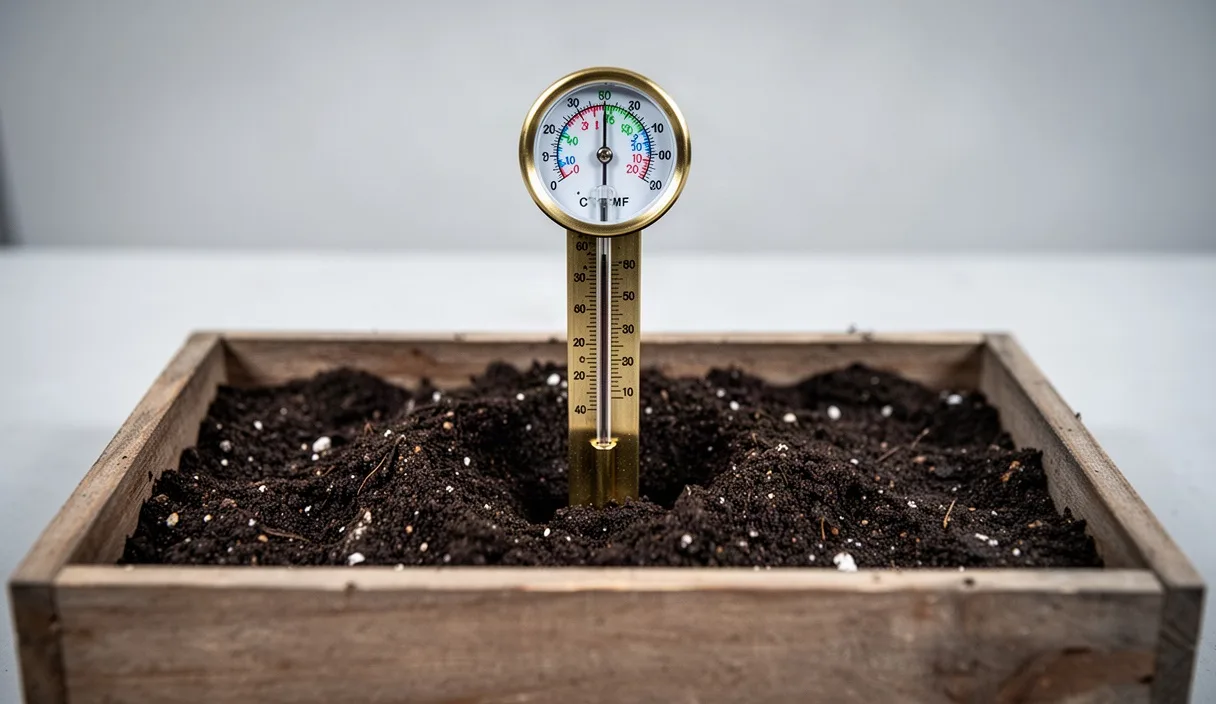

- Peppers require warmer substrate than brassicas.
- Soil probes provide accurate root zone data.
- Seedling heat mats stabilize overnight lows.
Soil temperature governs the internal clock of a dormant seed. Moisture softens the outer seed coat. Warmth activates the metabolic enzymes that trigger cell division. When the soil remains too cold, the seed sits in wet compost and rots. When the soil is too hot, delicate plant proteins break down before the radicle emerges.
Ambient air temperature rarely matches the temperature inside a seed flat. Evaporation from moist potting mix cools the soil by several degrees. Direct sunlight or heat mats warm it from below. Reliable germination depends on tracking the thermal conditions inside the root zone itself.
Measuring root zone warmth accurately
Air thermometers provide misleading information for seed starting. You need the internal reading of the top two inches of compost. This layer dries out quickly. It also loses heat to the room through surface evaporation.
Insert a dedicated soil thermometer or a digital kitchen probe into the growing medium. Push the sensor tip to the exact depth where you placed the seed. For brassicas, this depth is one-quarter inch. For squash, it is one inch deep.
Take readings at two specific points during the day. Check the flat at dawn before any heating system cycles up. Check it again in mid-afternoon when ambient light adds thermal energy. The average between these two points defines your baseline germination baseline.
Clean the probe between different flats. Pathogens transfer easily through moist soil clinging to metal stems. Wipe the shaft with isopropyl alcohol and dry it with a clean cloth before testing another tray.
Cold tolerant seeds for early spring
Certain vegetable families germinate in cool ground. Their enzymes activate at temperatures barely above freezing. These crops originated in temperate or maritime climates. They tolerate slow starts without rotting.
Spinach yields the highest germination rates between 45 and 65 degrees Fahrenheit. At temperatures above 75 degrees, spinach seeds enter thermal dormancy. They refuse to wake up until the soil cools down again. Peas and fava beans emerge reliably at 50 degrees Fahrenheit, though they take up to two weeks at that level.
| Vegetable | Minimum Temp (F) | Optimum Range (F) | Days to Emerge |
|---|---|---|---|
| Spinach | 35 | 45 to 65 | 7 to 14 |
| Peas | 40 | 55 to 70 | 9 to 13 |
| Lettuce | 35 | 60 to 68 | 4 to 7 |
| Radish | 40 | 60 to 75 | 3 to 6 |
| Kale | 40 | 65 to 75 | 5 to 8 |
| Onion | 35 | 65 to 75 | 6 to 10 |
Lettuce demands light as well as cool soil. Barely dust compost over the seed. Keep the flat around 65 degrees Fahrenheit. Higher heat causes patchy emergence and weak hypocotyls.
Brassicas tolerate a wide span. Cabbage, collards, and broccoli sprout at 45 degrees Fahrenheit. However, they emerge twice as fast when the compost reads 70 degrees. You can start them in cool rooms if you allow extra days for the cotyledons to show.
Heat loving crops and germination ranges
Solanaceous crops and cucurbits require steady warmth. Their cellular growth stalls below 60 degrees Fahrenheit. Fungi in the soil attack the dormant seed before it can break through the seed coat.
Sweet peppers demand the most warmth of the common nightshades. They require a steady root zone between 80 and 85 degrees Fahrenheit. At 65 degrees, pepper seeds can take three weeks to sprout. At 82 degrees, the same seeds emerge within eight days.
| Vegetable | Minimum Temp (F) | Optimum Range (F) | Days to Emerge |
|---|---|---|---|
| Tomato | 50 | 75 to 85 | 5 to 8 |
| Sweet Pepper | 60 | 80 to 85 | 7 to 12 |
| Eggplant | 60 | 78 to 88 | 7 to 10 |
| Cucumber | 60 | 80 to 90 | 3 to 5 |
| Watermelon | 65 | 85 to 95 | 4 to 6 |
| Okra | 65 | 85 to 90 | 5 to 7 |
Tomatoes tolerate slightly lower heat than peppers. They sprout well at 75 degrees Fahrenheit. Eggplants share the heat requirement of hot peppers. Keep eggplant trays warm until the first true leaves form.
Cucurbits germinate rapidly under warm conditions. Squash, melons, and cucumbers push up within four days at 85 degrees Fahrenheit. In cool soil, cucurbit seeds absorb water, swell, and turn to mush within a week.
Using heating mats under seed flats
Commercial electric heating mats supply bottom heat to seed flats. They counter the cold drafts that sit on floorboards and tables. They typically raise the root zone temperature by 10 to 20 degrees above the surrounding room air.
Always connect the mat to an external digital thermostat controller. Unregulated mats run continuously. On warm afternoons, an unregulated mat can push the compost above 95 degrees Fahrenheit. That level of heat kills tomato and brassica embryos.
- Position the heat mat on a flat, dry, heat-resistant table surface.
- Place the seedling tray directly on top of the mat.
- Insert the thermostat temperature probe into the middle cell of the flat.
- Firm the soil around the probe so the sensor detects moisture and soil heat.
- Set the target temperature on the digital controller interface.
- Cover the tray with a clear humidity dome to stop evaporative cooling.
Check the moisture of the flat every twelve hours. Bottom heat pulls moisture up through the cells quickly. The bottom of the soil plug dries out first. Water from the bottom with room-temperature water to keep the root area damp.
Adjusting room temperature after sprout emergence
Germination requires heat. Vegetative growth requires cooler conditions and bright light. As soon as the green loops of the seedlings emerge, their environmental needs shift completely.
Remove the flat from the heating mat immediately after half of the seeds sprout. If you leave the young stems on bottom heat, they grow tall, pale, and weak. The cells stretch too fast in search of light while the warm soil pumps water into the stem.
Drop the ambient room temperature by roughly 10 degrees once the seeds shed their seed coats. A day temperature of 65 to 70 degrees Fahrenheit produces stocky, resilient stems. Night temperatures can safely fall to 55 or 60 degrees for most garden vegetables.
Provide immediate air movement across the leaves. A small oscillating fan running on low speed prevents fungal buildup. The physical breeze also stresses the stem walls slightly. This stress prompts the plant to produce thicker, sturdier main stems.
Preventing uneven heat distribution
Seed trays frequently develop hot spots and cold edges. The perimeter cells sit against open, cooler air. The center cells retain moisture and absorb the concentrated heat from the center of the mat.
Use an insulating layer under the heating mat. A sheet of closed-cell foam board or thick cardboard stops the table from absorbing the heat. This forces all thermal energy upward into the soil cells.
Rotate the trays end-to-end every two days. The edge rows lag behind the center rows without rotation. Turning the tray balances the exposure to drafts and localized light sources.
Inspect the contact points between the tray bottom and the mat surface. Standard plastic trays warp over time. Warped trays create air gaps beneath the cells. Air gaps act as thermal breaks, leaving those specific cells cold while neighboring cells overheat.
Common mistakes
- Leaving flats on heating mats after the cotyledons fully expand.
- Relying on wall thermometers instead of probing the actual compost.
- Sowing cool-season greens like spinach in warm rooms above 75 degrees Fahrenheit.
- Using icy tap water to moisten seed flats that sit on warm mats.
- Forgetting to place the thermostat probe directly inside the growing medium.
- Allowing the soil surface to dry out under the heat of overhead grow lamps.
Practical next steps
Gather your equipment before opening your seed packets. Test your heat mat and digital probe in an empty tray filled with damp potting mix. Let it run for 24 hours to confirm the thermostat maintains your set target without wide swings.
Sort your seed stock by germination temperature rather than planting date. Group your cool-season crops together on open shelving in an unheated room or basement. Reserve the heat mats exclusively for your nightshades, alliums, and warm-season vines.
If you encounter unusual electrical issues or persistent equipment failures with heating elements, consult a qualified electrician. Keep records of your actual emergence dates alongside your daily soil temperatures in a garden journal. These notes will calibrate your setup for subsequent seasons.
This journal provides educational content only; consult your regional agricultural extension office for local planting dates and soil pathology. Disclaimer